
Three essential principles for leading in a multi-generational setting
Published: 28 Jul 2015
The art of leadership when working with multiple generations
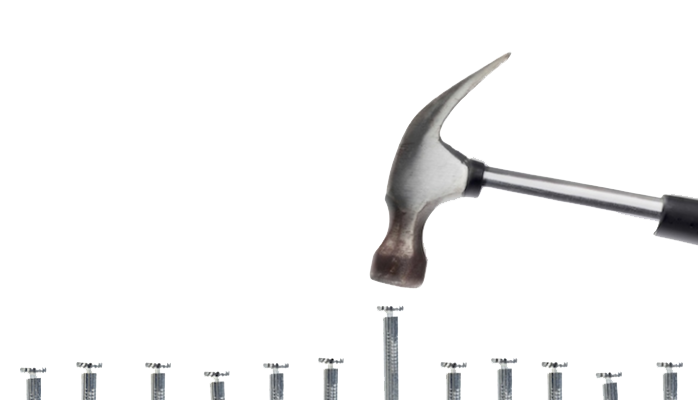
“Leadership” to me is more than just one person, an individual leader—but beyond himself or herself to include the interactive influence between people for a particular goal. As you may know, Asians are quite hierarchical. And, in the context of Japan, there is a saying:"Deru kugi wa utareru." or... “The nail that sticks up gets hammered down.”So in this particular society, we don't appreciate unique young people who especially stick out, and so these people tend to get pounded down. So that’s the context or milieu of our work. However, this is not the way leaders need to treat people. There are three things to remember when leading in a multi-generational setting.
1. Leadership is about people, so treat everyone as God intends.
When working with a different generation, keep in mind that leadership is about basically about people. You need to get to know each person as a human being. You understand this: treat each human as God designed us to be treated and to treat each other with respect. That's the bottom line. Unless you really understand who you are, there is no leadership. Unless you know who I am, there is no on leadership relationship or followership. So to understand each other is the most basic goal, regardless of whether you are leader or follower. Many people are confused, thinking that understanding means agreement. But understanding is not agreement. We need to first understand, and then from there, we need to work together.2. Relationship building results in greater trust and influence.
The generation gap is always a big challenge, but focusing on building the relationship always results in trust. If you build good relationships, the result or reward is deeper sense of trust. And, more importantly then, that trust is the foundation or bridge, though which you can exercise influence or leadership. So the leadership question to continually ask yourself is:“How can I deepen my relationship with people I lead?”If this is your focus, you will deepen trust and expand your positive influence in their lives.
3. Don’t confuse the person with idea or performance.
 There’s a technique when trying to deepen understanding and respect. You should regularly ask followers, “What do you think?” Whether you and I agree to implement your idea or not is not as important as being aware that this person’s mind produced this idea or opinion. You need to be thinking that this is the way this person looks at things—and then respect that.
At the same time, understand that this opinion or idea is not the person. This is the tricky part. In order to respect you, I need to respect you as a person. So I need to listen to you. But their idea is not their person. I need to understand that whatever I think is not really me, but it’s a result of my processing.
Let's say you accept my idea, so I naturally feel like you love me, and you respect me. However, it follows that if you reject my idea, we conclude that you don't like me and don’t respect what I have to say or contribute. That’s unfortunately mixing up the idea with the person.
Leaders also mistakenly confuse performance with the person. Those are two different things. So performance is performance. Around the office table, we can objectively critique, “Does this performance really bring us to the next level toward the desired goal or not?” That discussion is not critiquing you as a person. Each person is very valuable. You cannot replace any one person on this earth, so everyone is valuable. But the performance is different.
As leaders, we need to always affirm the person, especially when we are critiquing their ideas or performance.
So understanding these three principles is a kind of art of leadership in a multi-generational setting.
Do you have any principles you’d like to share? Let’s learn together. Feel free to leave a comment.
Takeshi Takazawa
There’s a technique when trying to deepen understanding and respect. You should regularly ask followers, “What do you think?” Whether you and I agree to implement your idea or not is not as important as being aware that this person’s mind produced this idea or opinion. You need to be thinking that this is the way this person looks at things—and then respect that.
At the same time, understand that this opinion or idea is not the person. This is the tricky part. In order to respect you, I need to respect you as a person. So I need to listen to you. But their idea is not their person. I need to understand that whatever I think is not really me, but it’s a result of my processing.
Let's say you accept my idea, so I naturally feel like you love me, and you respect me. However, it follows that if you reject my idea, we conclude that you don't like me and don’t respect what I have to say or contribute. That’s unfortunately mixing up the idea with the person.
Leaders also mistakenly confuse performance with the person. Those are two different things. So performance is performance. Around the office table, we can objectively critique, “Does this performance really bring us to the next level toward the desired goal or not?” That discussion is not critiquing you as a person. Each person is very valuable. You cannot replace any one person on this earth, so everyone is valuable. But the performance is different.
As leaders, we need to always affirm the person, especially when we are critiquing their ideas or performance.
So understanding these three principles is a kind of art of leadership in a multi-generational setting.
Do you have any principles you’d like to share? Let’s learn together. Feel free to leave a comment.
Takeshi Takazawa
More Information
http://www.youtube.com/watch?v=Yt7OKa_V5VI Takeshi Takazawa shared some of these principles at the intensive workshop at Eagles Leadership Conference on July 24, 2015. The workshop was entitled, "Partnering Church and Corporation: Making Community Impact Together.”
- Watch clip on YouTube: http://www.youtube.com/watch?v=Yt7OKa_V5VI
- Takeshi Takazawa's staff profile...
Please share on social media:













VP for Innovative Initiatives at A3.business
Takeshi was born and raised in Tokyo, Japan. He became a Christian through a children’s English class held in partnership with A3 and a local Japanese church. He quickly became involved in serving in the church and by the time he was in college he was involved in various leadership roles. After graduation, he joined A3 as Acting Business Manager for the English language schools and from there he worked with others to start the Church Planting Networks. He also began teaching and training in other Asian countries. Currently, he is also involved in various special projects in Japan and Asia, including disaster relief and leadership renewal and development.
Latest posts by Takeshi Takazawa (see all)
- Seven Ways to Creatively Bridge the Generation Gap - 12-August 2015
- Three essential principles for leading in a multi-generational setting - 28-July 2015
- True partnership always takes place in authentic community - 3-June 2015
Posted in Leader Development
Tagged Eagles Leadership, generation gap, Japan, leadership, Takeshi Takazawa
Comments Off on Three essential principles for leading in a multi-generational setting
Post Categories
Recent Posts
- New A3.business Cohort Launches in Seoul, South Korea
- “We need this urgently!”
- Daily time to reflect and seek peace
- Fostering Movements that Accelerate the Great Commission
- JCE7: Japan Congress on Evangelism and Paradigm Shift in Mission
- Aging Japanese businesses and churches seek successors
- 25 Marketplace Leaders Explore Launching A3 in Their Countries
- Why We Need to Re-Think Unity in Four Dimensions
- Relationship with Humanity Apart from Doing
- Christlike Servanthood
Popular Tags
WHAT THEY'RE SAYING...
 ""There are plenty of ministries to help Christian leaders develop their skills. What sets A3.business apart is a focus on the transformation of a leader’s soul. A3 holds an integrated vision of life and leadership that refuses to separate a person’s calling in the world from his or her communion with Christ. By targeting this deeper level of existence, A3.business equips leaders with a new vision of faithfulness and not merely new tools of effectiveness.""
Skye Jethani, Author, Speaker, Consultant and Pastor. Former senior editor for Leadership Journal
SkyeJethani.com | more endorsements...
Helping Leaders Thrive...
Creating the space and community for transformation to happen.
Search website
A3 locations
A3 Offices
Bringing meaning to business
Contact Info
SUBSCRIBE to posts via email